Sit down and scan
A provider or trusted helper scans an unused bracelet with the person.
A simple idea for difficult moments
A passive QR bracelet gives responders, service providers, and trusted helpers a fast way to call the people a wearer chose—without an app, battery, or medical record.
Prototype only. Use synthetic information until privacy and legal review is complete.
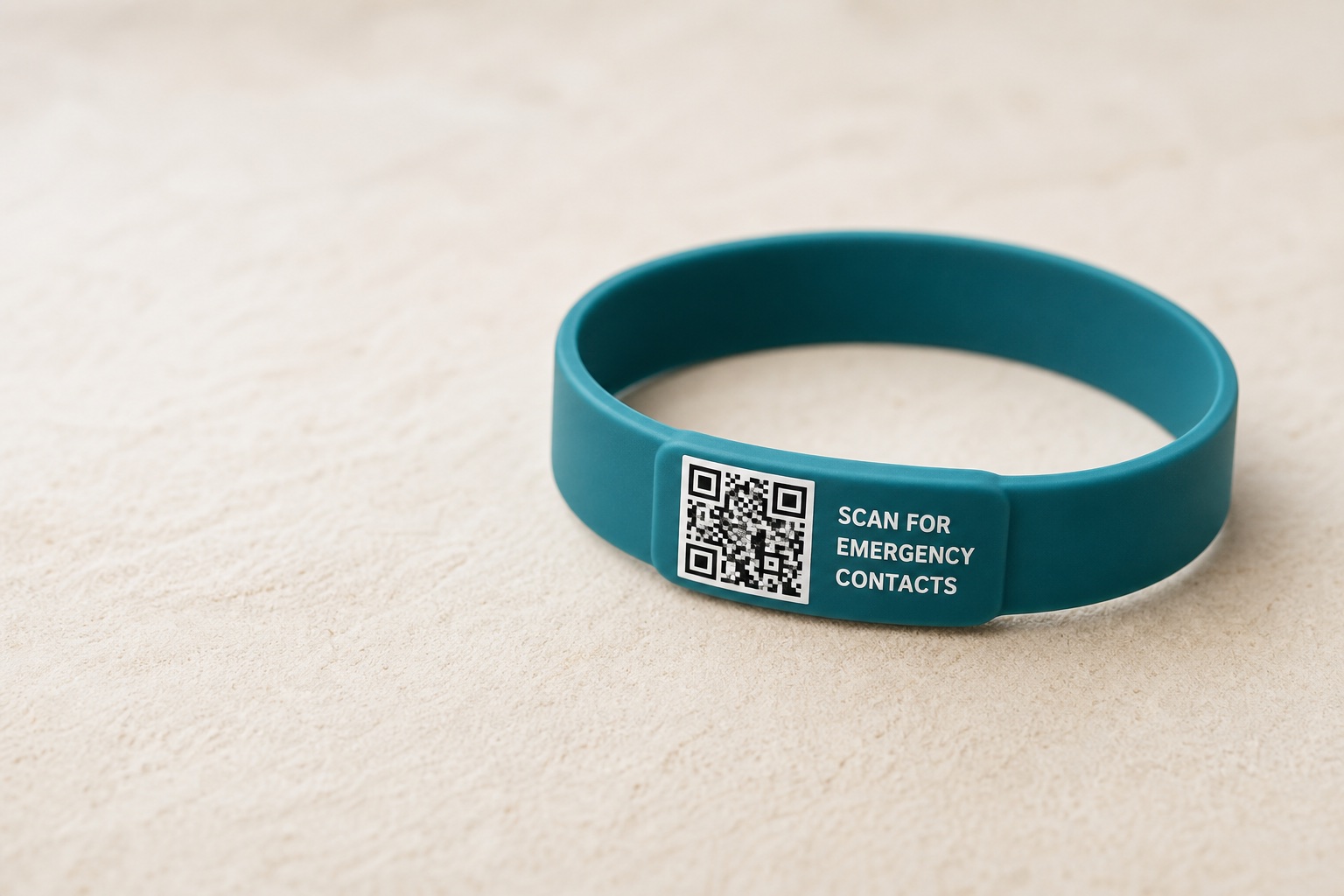
The whole product
The bracelet can show contact names with a phone number, email address, or both. Each contact is simply a family/friend or service provider. It does not ask for diagnoses, medications, treatment history, location, or the wearer's name.
One scan in, one scan out
A provider or trusted helper scans an unused bracelet with the person.
Add contact names with a phone number, email address, or both.
No charging, app, account, or special reader is needed.
A responder scans
Designed with restraint
The page is unlisted and protected by a cryptographically random URL. It is not searchable or realistically guessable, but anyone who has the bracelet—or a photo of it—can read the contacts. That is the same basic tradeoff as a paper card in a pocket.
Current status
The goal is to make a credible demonstration, put a few physical bracelets in hand, and learn whether the idea deserves a next phase. Real-world use would require privacy, legal, security, and accessibility review.